Launching Astro Pi 2026/27: Code your way to the International Space Station
Strap yourselves in for an out-of-this-world journey! The European Astro Pi Challenge 2026/27 officially launches today, 14 September 2026!
Young people across Europe and Canada are invited to participate in two fun coding missions, offering them the amazing opportunity to run their programs on the Astro Pi computers aboard the International Space Station (ISS). Every successful team will receive official certificates complete with runtime details and orbital coordinates, along with their very own space data and image sets to download and keep.
The European Astro Pi Challenge is an ESA Education project run in collaboration with the Raspberry Pi Foundation, and implemented by ESEROs at a national level. It gives young people the chance to learn how to code and conduct real space science in orbit.
Which mission will your teams launch this year?
Mission Zero: Art in orbit
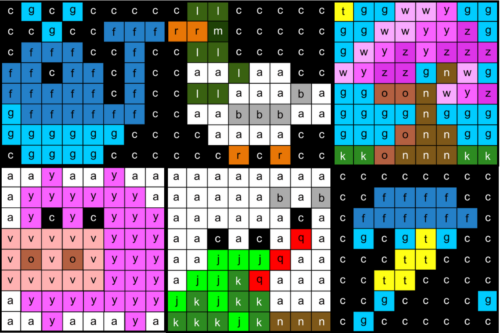
Send your art to orbit and create colorful pixel art with code! Mission Zero is a beginner-friendly Python activity, perfect for young people aged 9 to 16 with no prior coding experience.
Participants use our web-based code editor to set image colors and capture live light readings to adapt their artwork. In our step-by-step project guide, you’ll find a selection of starter examples to modify and make your own, all chosen directly from entries from the 2025/26 season.
Because so many teams love bringing their artwork to life, Mission Control has included step-by-step worked code examples in our project guide: one that creates a static image, and another that outputs a two-frame animation. Your team can modify the colours, add extra frames, or design an entirely original piece. We can’t wait to see what participants create.
Mission Space Lab: Real orbital science
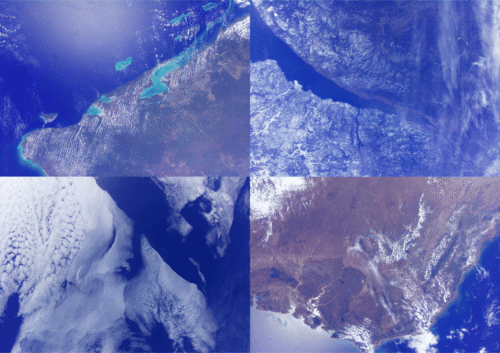
Calling all aspiring space scientists! Mission Space Lab gives young people aged 12 to 19 the chance to capture real sensor data and Earth observation images while the ISS orbits 400km above us.
Working in teams of between two and six young people, participants write a Python program to log sensor or camera data to explore life on Earth or orbital mechanics. Teams can design an entirely original space science project or use our ready-made guides to analyse vegetation using NDVI imaging, or calculate the speed of the ISS. Every eligible program is guaranteed a ten-minute flight slot on the ISS.
This year, you’ll find a template for a basic data capture submission in the Mission Space Lab Creator Guide. It provides a great starting point for teams to predict the output of their program, test their logic, and customise their code. What will your team choose to investigate?
Meet our ambassador
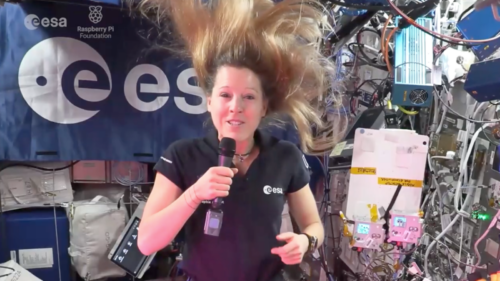
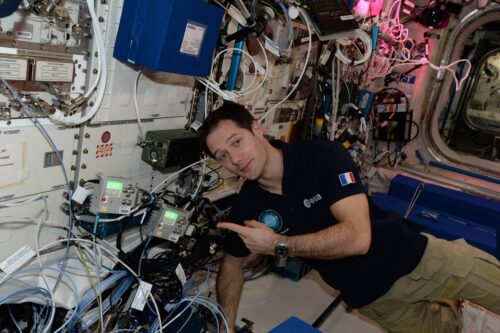
We are excited to announce that ESA astronaut Thomas Pesquet will be the ambassador for the European Astro Pi Challenge this year. Having worked aboard the ISS, Thomas knows how important it is to conduct scientific experiments in space. Plus, Thomas is no stranger to the European Astro Pi Challenge. In fact, he has been our ambassador twice before, during the 2016/2017 and 2020/2021 editions. He is currently preparing for his next mission, having been selected to command a private astronaut mission, planned for 2027.
Get in touch with Mission Control
The Astro Pi Mission Control team is here to support you every step of the way. Visit our website to learn how to book a support call with our team, or reach out to us directly at contact@astro-pi.org.
We’ll also be hosting interactive support sessions and livestreams for both missions throughout the year. Make sure you stay connected by signing up for our official newsletter.
In the meantime, look to the stars and see how far your young people can reach!





No comments
Jump to the comment form