
What shaped computing education in 2025 — and what comes next
To mark the start of 2026, we’re releasing a special episode of our Hello World podcast, which reflects on the key developments in computing education during 2025 and considers the trends likely to shape the year ahead.
Hosted by James Robinson, the episode brings together a conversation between three Foundation team members — Rehana Al-Soltane, Dr Bobby Whyte, and Laura James — and perspectives from colleagues and partners in Kenya, South Africa, and Greece.
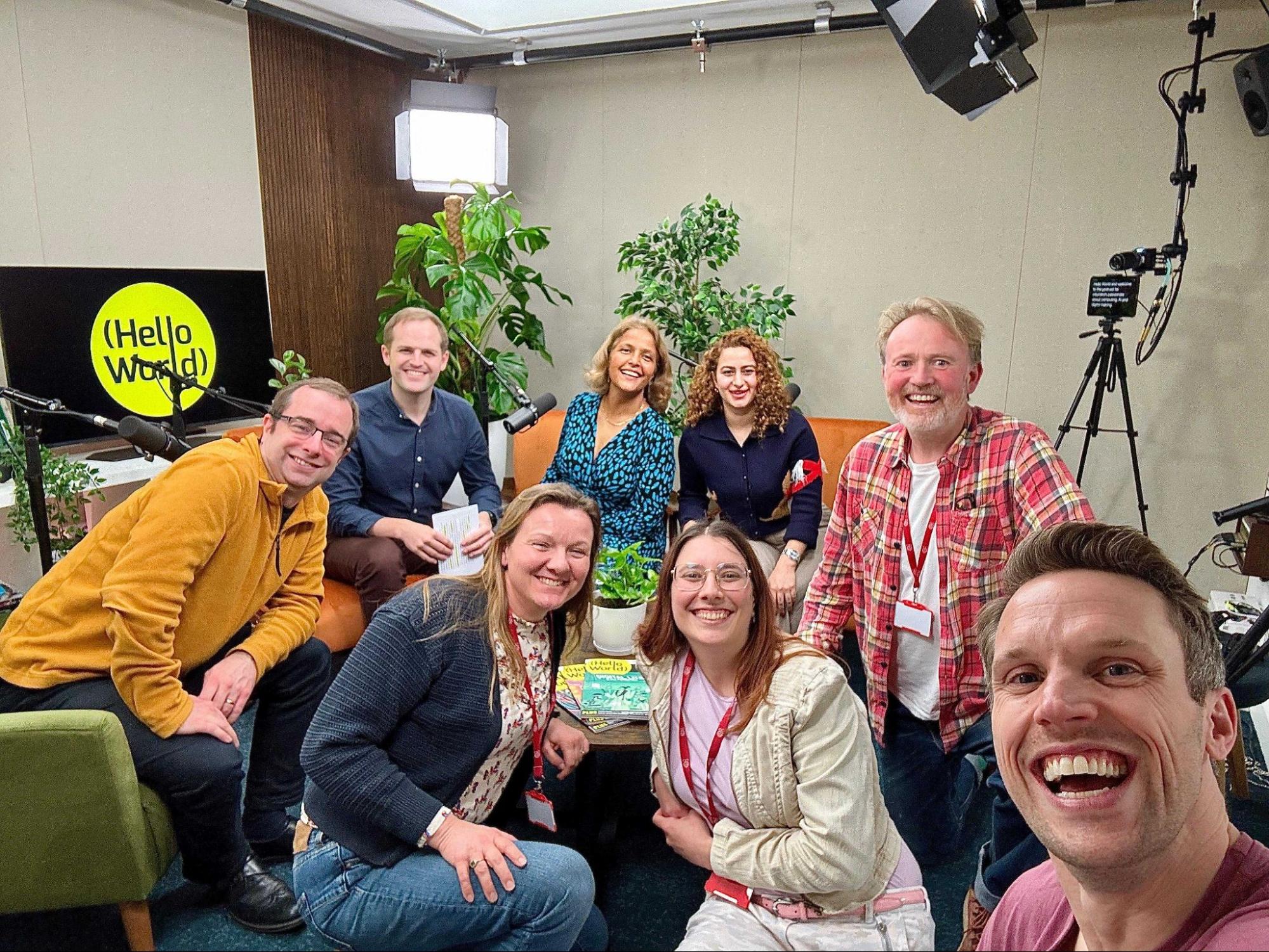
The podcast is framed around three major themes that defined 2025: data science, AI literacy, and digital literacy, all of which continue to play an increasingly important role in education systems worldwide.
Looking back at 2025
In the podcast, Rehana reflects on a year characterised by research, collaboration, and community, highlighting the importance of global partnerships in developing and localising AI literacy resources for diverse educational contexts.
From a research perspective, Bobby explains that 2025 was about pulling together what we already know and making sense of it, to better understand what good data science education should look like, including curriculum design, pedagogy, and appropriate tools.
Laura focuses on resilience and creativity in computing education, as well as the growing presence of more personalised forms of artificial intelligence, which present both significant opportunities and complex ethical challenges.

A key concern raised throughout the episode is the risk of cognitive offloading, whereby learners rely on AI tools to bypass critical thinking processes. The speakers emphasise the need for learning experiences and assessments that value process, reasoning, and reflection rather than solely final outputs.
The episode also examines barriers to the adoption of computing and AI education, including teacher confidence, limited access to devices, restrictive school IT policies, and the need for translated and localised resources.
Contributions from our colleagues around the world highlight stark contrasts in educational contexts, with challenges such as funding constraints, connectivity issues, and teacher training needs, alongside examples of innovation where educators are adequately supported.
What’s ahead
Looking ahead to 2026, Rehana outlines the potential of interdisciplinary approaches to AI literacy, integrating AI concepts into subjects such as geography, history, languages, and the arts to increase relevance and engagement (look out for our upcoming research seminar series on the topic).

Bobby anticipates a gradual shift towards more data-informed approaches to computing education, with greater emphasis on classroom-based trials and research that directly informs practice.
Laura offers a strong call to renew focus on cybersecurity education, arguing that security and safety must remain central as digital systems and AI technologies continue to evolve.
In a series of concise predictions, the speakers point to increased attention on explainable AI, wider integration of AI literacy across the curriculum, and renewed concern for digital safety and security.
More from Hello World
You can subscribe to Hello World and listen to the full podcast episodes from wherever you get your podcasts. Or you can find this and previous Hello World podcasts on our podcast page.
Also check out Hello World magazine, our free digital and print magazine from computing educators for computing educators.





No comments
Jump to the comment form