
An astronomical anniversary: Young people’s code heads to the International Space Station
The results are in!
Today is the day mentors and teams find out if their code has achieved flight status for the European Astro Pi Challenge 2025/26! The first batches of Mission Space Lab programs are scheduled to start running on the International Space Station (ISS) this week, with Mission Zero programs scheduled to run in mid-May.
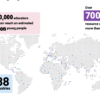
This year, Astro Pi Mission Control received an incredible 17,381 submissions for Mission Zero from 24,695 young explorers.
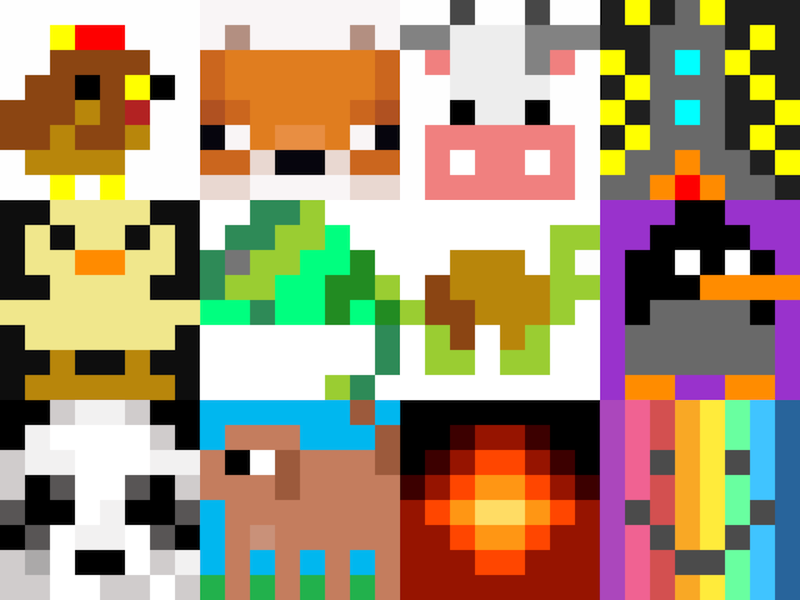
For Mission Space Lab, 404 teams took on the challenge of calculating the speed of the ISS. After rigorous testing and security checks by our team on the ground, we are delighted to announce that 387 teams have been awarded flight status.In total, 25,707 young people will have their programs run in space this year. Huge congratulations to everyone who passed testing — we can’t wait to see how your code performs 400km above Earth!
Who joined the mission in 2025/26?
Every year, we dive into our participation data to see how the Astro Pi community is growing. This helps us ensure we’re reaching young people everywhere, from classrooms to community hubs.
Our data shows that participants in the entry-level Mission Zero have an average age of 12, with some as young as 6 years old and the oldest 18 years old. The more advanced Mission Space Lab sees the average age rise to 15 as the technical complexity increases. The youngest participants for Mission Space Lab were 10 years olds, and the oldest were 19 years old.
Improving gender balance in computing is a key priority for us and Astro Pi remains popular with girls: 44% of Mission Zero entrants identify as female — a fantastic result that is consistent with previous years.
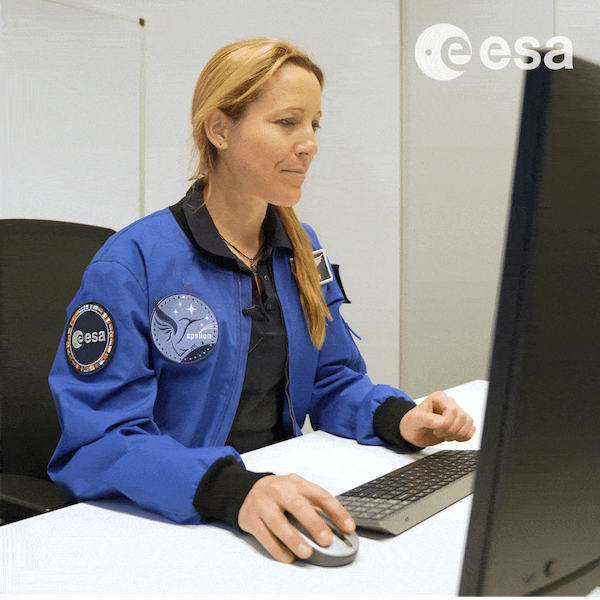
We even had one very special participant! ESA Astronaut Sophie Adenot created her own entry for Mission Zero, re-imagining her Epsilon Mission patch in pixel art.
For Mission Space Lab, 26% of participants identify as female. This reflects wider trends in STEM: as projects get more complex and young people get older, the gender gap widens. Despite this, girl’s participation in Mission Space Lab remains roughly consistent from year to year (27% for 2024/25).
These results highlight the importance of our ongoing work to support girls in transitioning from block-based coding to advanced Python and reinforce our mission to keep providing accessible, inspiring pathways for everyone.
Where does Astro Pi take place?
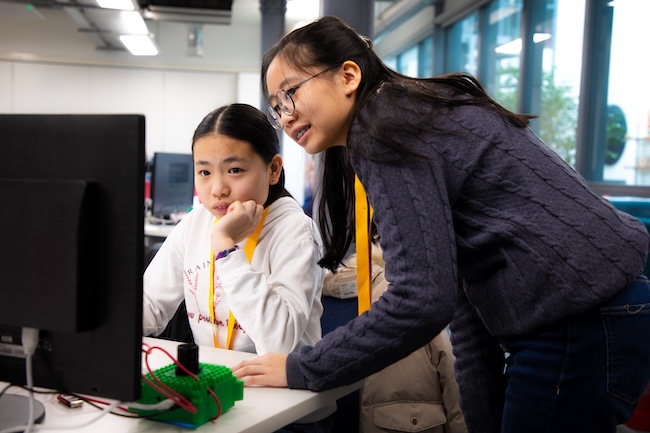
While secondary schools remain our biggest mission hubs (hosting 68% of Mission Space Lab and 50% of Mission Zero teams), we’ve seen an exciting boost in community participation. This year, more young people than ever took part through Code Clubs, libraries, and youth centers.
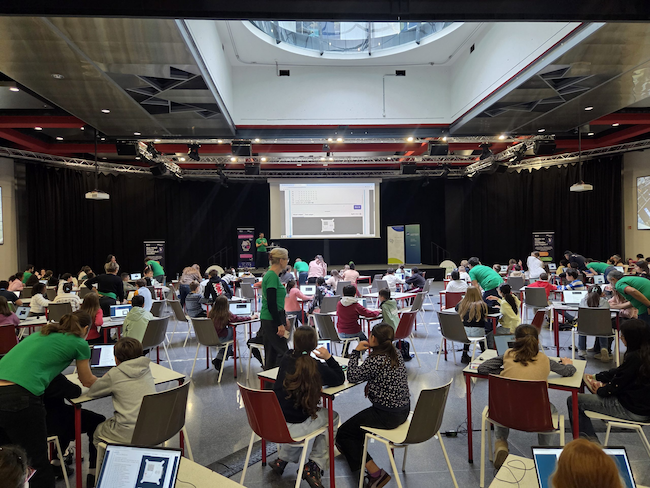
“On November 14, 2025, we organised an exceptional event around the Astro Pi Mission Zero project, bringing together nearly 300 young participants to write a short computer program to display a personalised message on board the International Space Station (ISS). For a day, students discovered that coding could literally… send them to space!”
– ESERO Luxembourg
Impact on the ground
It’s been a busy year for Mission Control. We’ve been across the UK, Ireland, and ESA member states training mentors and running workshops.
“The Mission Zero workshops were a fantastic opportunity for our students to experience coding in a meaningful and inspiring context. It really helped bring computer science to life, and we’ve seen increased interest from students wanting to explore coding further.”
– Ms Qureshi, Nene Park Academy, Peterborough, UK
It’s also been a year of incredible connections: we surprised families at the London Science Museum with a visit from Tim Peake for our 10th anniversary and our DevOps expert Geraint Ballinger visited teams taking part at libraries in Glasgow, Scotland, to help debug their code. Who knows? Next year, Mission Control could visit a school or Code Club near you!
“The structured approach helped me guide our mentors on how to deliver it step by step. We started with the pitch deck and YouTube Intro, then went to designing the 8×8 pixel art on paper, to finally translating the pixel art to Python code. Even students as young as nine were able to complete the project, and their excitement knowing their code could run in space was incredible to see.”
– Kokia, Mentor, Canada
Next steps
Well done again to everyone who achieved flight status. Your code is about to leave the atmosphere and head into orbit!
ESA Astronaut Sophie Adenot will be aboard the ISS while your programs are running and will be recording a special video message for all our participants!
Finally, keep an eye on your inbox — we’ll be sending out official certificates for all participants in June 2026. Until then, stay curious!

No comments