
Many paths into mentoring: Building inclusive Code Clubs in Glasgow
Across Glasgow’s libraries, Code Clubs are opening doors for young people to explore creativity, problem-solving, and confidence through coding. Behind many of these sessions is Claire Quigley, who supports volunteers and helps Code Clubs thrive in community spaces across the city.
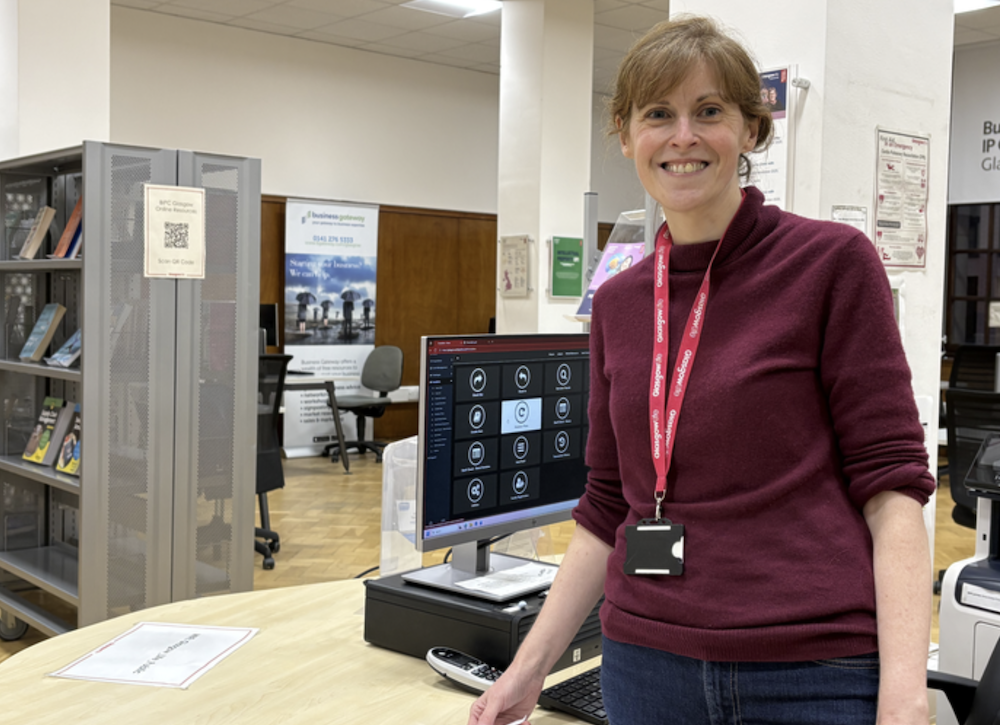
Claire’s story challenges the idea that there is only one route into technology or mentoring. With a background in computer science and a passion for teaching, she now helps create welcoming, inclusive environments where young people — and volunteers — from a wide range of backgrounds can belong.
From computing to community
Claire’s Code Club journey began long before she worked in libraries. With a degree and PhD in computer science, she spent time in academia before finding her way to community-based learning and volunteering. Teaching runs in her family, and sharing knowledge has always brought her joy. That’s why, after being introduced to CoderDojo (part of the Code Club community) through a friend, Claire began volunteering at club sessions.
“I had always intended to work in academia but, working as a postdoc for a couple of years, realised it wasn’t what I wanted to do long term. CoderDojo sessions gave me and the other volunteers a chance to look at more adventurous coding topics, without the constraints of curriculum and the time-pressure that teachers have to contend with.
“We were also able to engage with children and young people who were struggling with the formal education environment for a variety of reasons. Doing well at something they enjoyed increased their confidence and was often a factor in helping them become more engaged at school.”
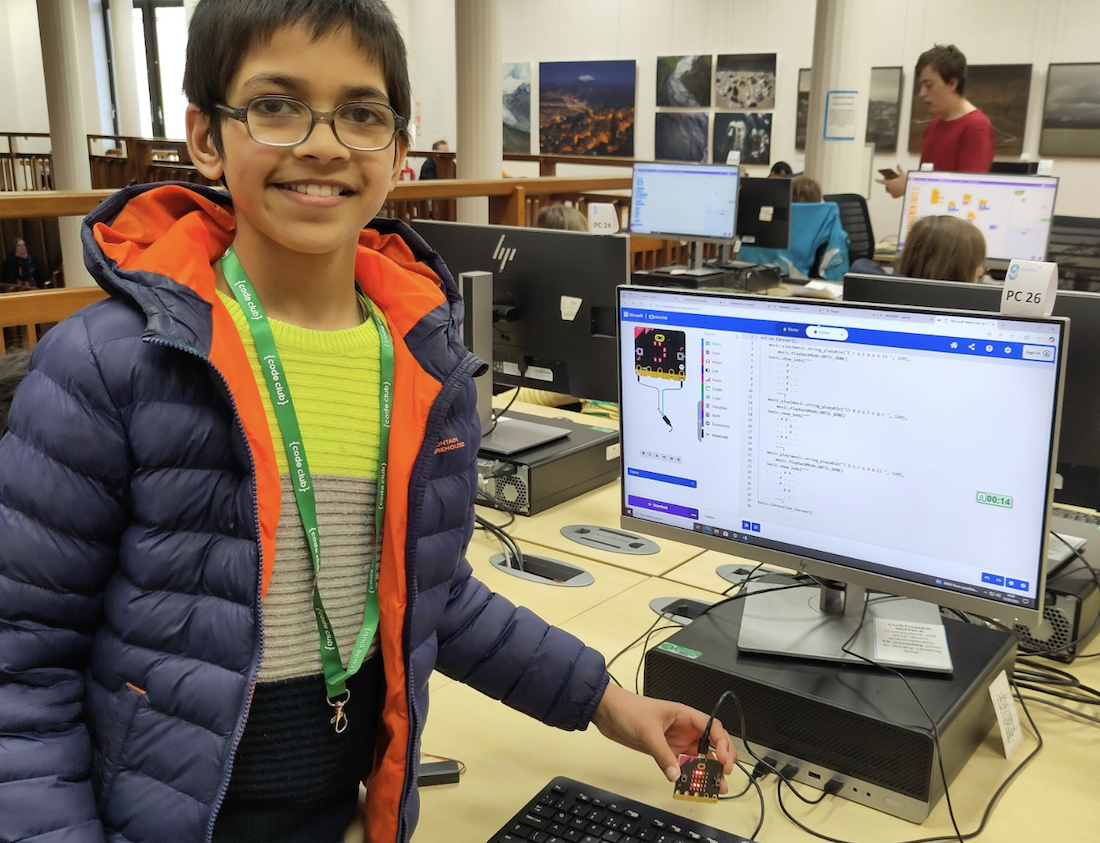
Becoming a Code Club volunteer eventually led Claire to her current role coordinating Code Clubs across Glasgow Life venues, including Mitchell Library, Gorbals, Drumchapel, and beyond.
“Working with Glasgow Life colleagues across libraries, communities and museums has given me the chance to connect with children, young people and adults in a non-threatening environment. Mixing coding with mediaeval manuscripts, wearable tech, poetry or electronic music has allowed people to approach a topic they hadn’t considered interesting or understandable and make some really original and fun things.”
Inside a Code Club session
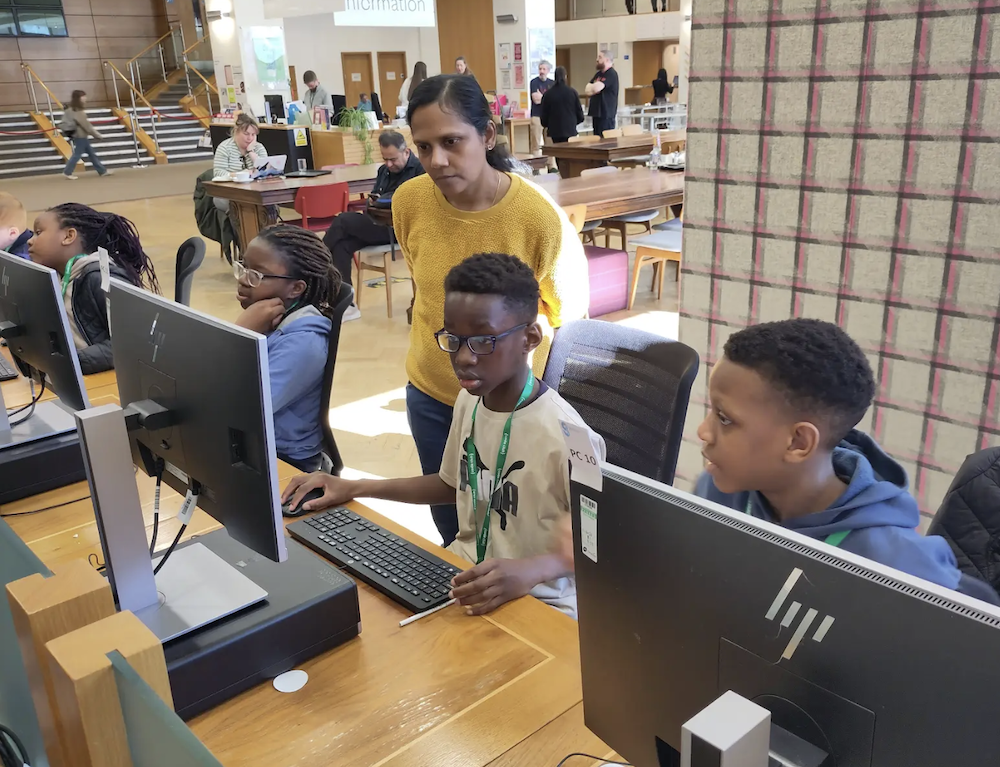
Stepping into one of Claire’s Code Club sessions, you’ll find a mix of focus, laughter, and creative chaos. Young people gather around laptops in library spaces to build games and animations in Scratch, experiment with micro:bits, and help each other solve problems as they go.
Sessions vary by location and age group. Some run weekly, others every two weeks, and each has its own character — from younger children discovering coding for the first time to teenagers returning with ambitious ideas they want to bring to life.
“The clubs are quite varied, depending on location, size and the personality mix of the coders and volunteers. Some clubs are quieter, while others are very lively! Scratch features prominently in most clubs. The children really enjoy the way it allows them to bring in topics they’re interested in, design their own characters, or build games inspired by other games they’ve played.”
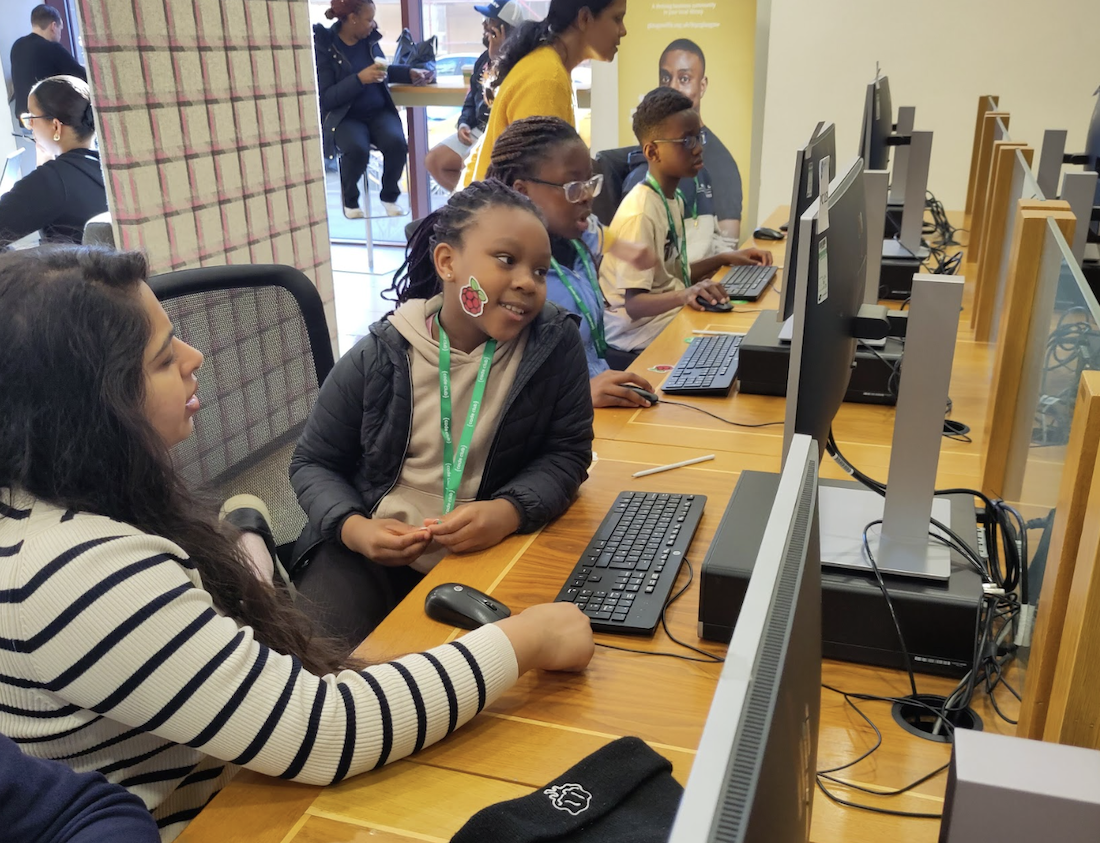
For Claire, these sessions are about more than learning to code. They’re spaces where young people practise problem-solving, learn to ask for help, and gain confidence in sharing their ideas.
“Some coders come with a friend or have made friends at the club. So there are often children working together on a project, chatting to each other about what they’re working on, or showing each other how to do something.”
Inclusion, confidence, and belonging
Inclusion is core to Claire’s approach. From running all-girls sessions to supporting volunteers and young people with neurodivergence and other additional needs, her focus is on creating spaces where everyone feels welcome.
“One young coder who spends a lot of time in his local library after school, but can be a bit boisterous, agreed to come and join the club. Initially a bit hesitant, he soon displayed a real talent for solving coding puzzles.
“He was particularly proud when, encouraged to try the challenge level rather than skipping past it, he solved it quickly. We printed a Code Club ‘Problem-solving Champion’ certificate for him and he carefully folded it up to take home.“
Claire has seen firsthand how confidence can grow when people are given time, patience, and encouragement.
Volunteers: The backbone of Code Clubs
That sense of belonging doesn’t stop with young people — it extends to the volunteers who help make these spaces possible. For some volunteers, involvement in Code Club has been a stepping stone to employment, new skills, or a stronger sense of belonging.
Like many community programmes, Code Clubs in Glasgow were disrupted by the pandemic. It made one thing clear: clubs only work when volunteers are willing and supported to run them. With fewer library staff available to anchor sessions, rebuilding the clubs meant casting a wider net for volunteers. As a result, volunteers arrived with more diverse life experiences, ways of thinking, and approaches to problem-solving, which enriched the sessions and created more inclusive learning environments for young people.
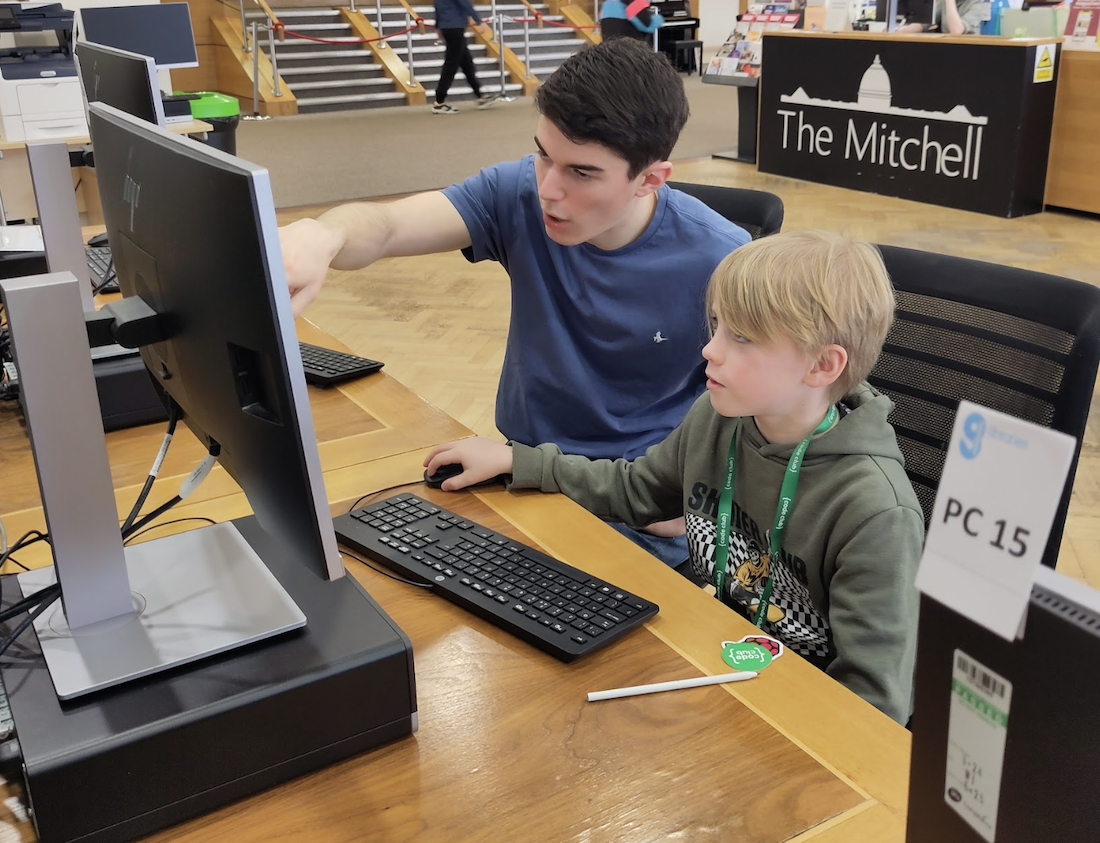
“I recruit mainly through the Glasgow Life volunteering website. I also advertise through STEM Ambassadors, via my contacts in local universities, colleges and tech companies, in the newsletter my colleague sends to students in the Glasgow Code Learning programme, and by putting up posters in libraries.
“I’m really keen to try and get a mixture of qualities in a team. I try to ensure at least one person is a confident programmer, who can help with trickier bugs and more advanced topics. However, I’m also keen to have volunteers who may not have so much of a technical background but are good at chatting to children and helping create a real sense of it being a club.“
Who makes a good Code Club volunteer?
One of the most important messages Claire wants to share is that there is no single type of Code Club volunteer. Students, career-changers, refugees, people returning to work, and neurodivergent people all bring valuable perspectives. While technical skills are helpful, Claire believes empathy, curiosity, and willingness to learn alongside young people are just as important.
“Finding out how to do something by searching online, asking other coders and the mentors is part of the code club experience (and the experience of being a professional programmer!) The main thing is not to be afraid to admit you don’t know something. Although this can be alarming at first, I’ve found the coders are happy to be told that I’ll look at it over the next week and report back. And that they should do the same so we can compare notes. And if they know how to do something that you don’t, they absolutely love explaining it to you!“
We asked Claire what she would say to someone who doesn’t see themselves as ‘technical enough’ but is curious about getting involved:
“The majority of library staff didn’t have any background in programming. They are simply happy to learn as they go along and help the children make their ideas come to life. In fact, one of these ‘non-technical’ staff ran a very popular and successful club and supported a team of coders to develop a project that [was chosen as a judges’ favourite] at Coolest Projects.”
As Code Clubs continue to grow and adapt, Claire hopes to see even more people step forward, especially those who might not immediately picture themselves in a mentoring or volunteering role.
Where community impact begins — with people
By keeping Code Clubs rooted in libraries and community spaces, it is possible to reach people across a wide range of backgrounds and circumstances.
Claire’s story is a reminder that community impact is built by people who care and that supporting young people with coding is about far more than technology alone. It’s about confidence, connection, and opening doors.
For anyone curious about supporting young people with coding, there are many ways to get involved. You don’t need to be an expert, as mentors support young people by encouraging curiosity, helping build confidence, and learning alongside them. If you’d like to find out more about what mentoring looks like and the different ways you can contribute, visit the Code Club mentor page to explore guidance, training, and next steps.






1 comment
Thea Thomas
nice