
Who is WEIRD? Thoughts on teaching with generative AI tools
Teaching is one of the most creative professions, and that creativity is reflected in the many innovative ways educators use generative AI tools in education. Many of us are experimenting with AI tools to help draft lesson plans, adapt activities for different learners, create code examples, and reduce some of the repetitive work that is a part of teaching. With AI tools becoming widely used in education, it is worth asking deeper questions: whose knowledge and perspectives are AI systems actually built from, and what could be the impact?
Where does the data come from?
Imagine a History teacher planning a lesson on empires or migration. If they built the lesson on one textbook or national perspective, it may tell a very different story to a lesson built on multiple sources, cultures, and interpretations. Teachers are used to thinking critically about where their information comes from, whose perspectives are represented, and how source selection shapes their learners’ understanding.
Generative AI raises similar questions at a much larger scale. Generative AI models are created using enormous training datasets, which contain data gathered on the internet from websites, books, forums, social media platforms, and videos. The outputs of generative AI models, such as large language models (LLMs), will reflect the views, cultures, assumptions, and priorities most heavily represented in their training data.
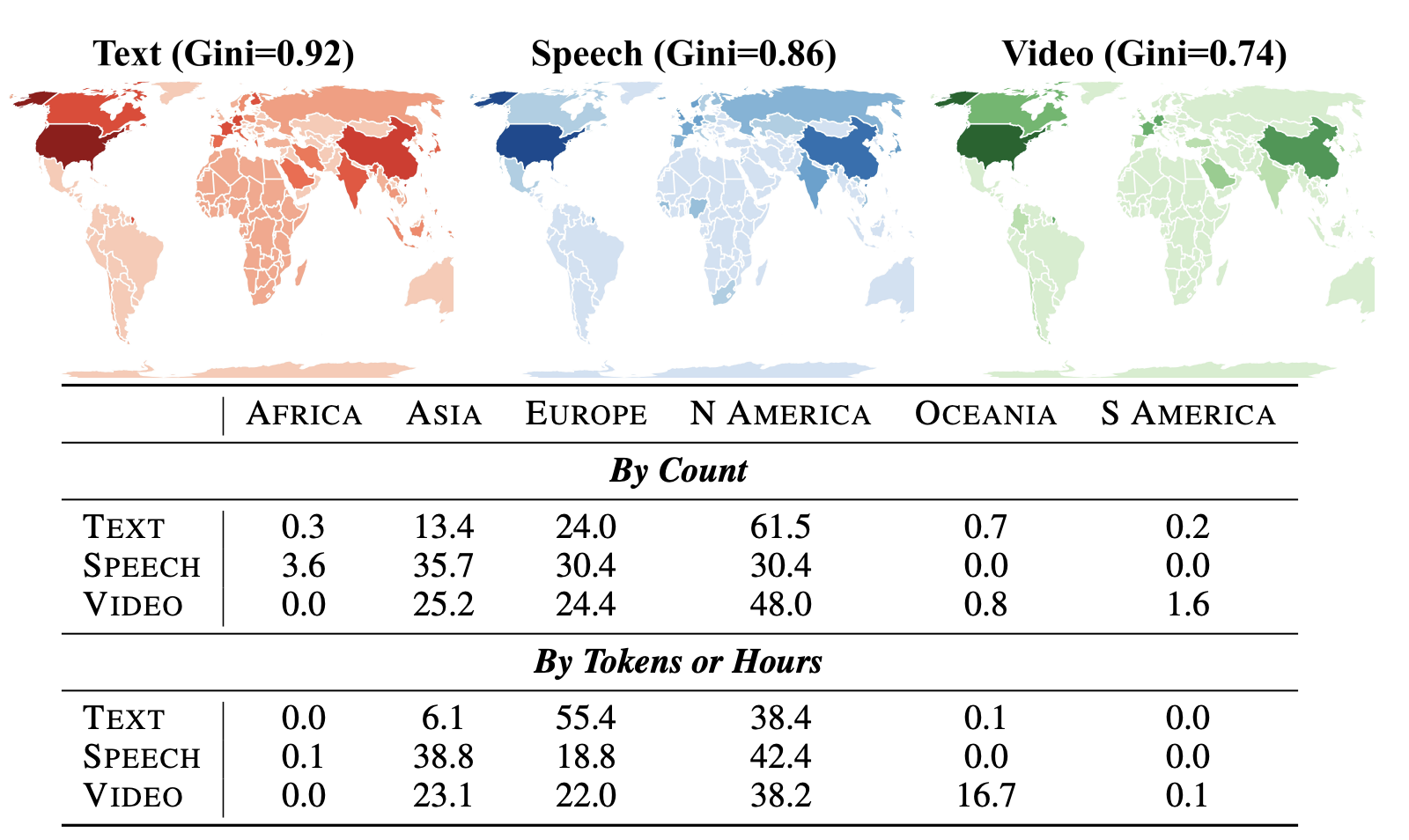
Where data comes from and who created the data is called ‘data provenance’ by researchers. In a research project to audit the data provenance of over 4000 datasets used to train modern AI models, the project team found that “[data] creators are heavily concentrated in the US, China, and Western Europe, with little to no representation in South America or Africa, across [text, speech, and video]”. That means the perspectives of people across South America or Africa are underrepresented in the resulting AI models.
Who is WEIRD?
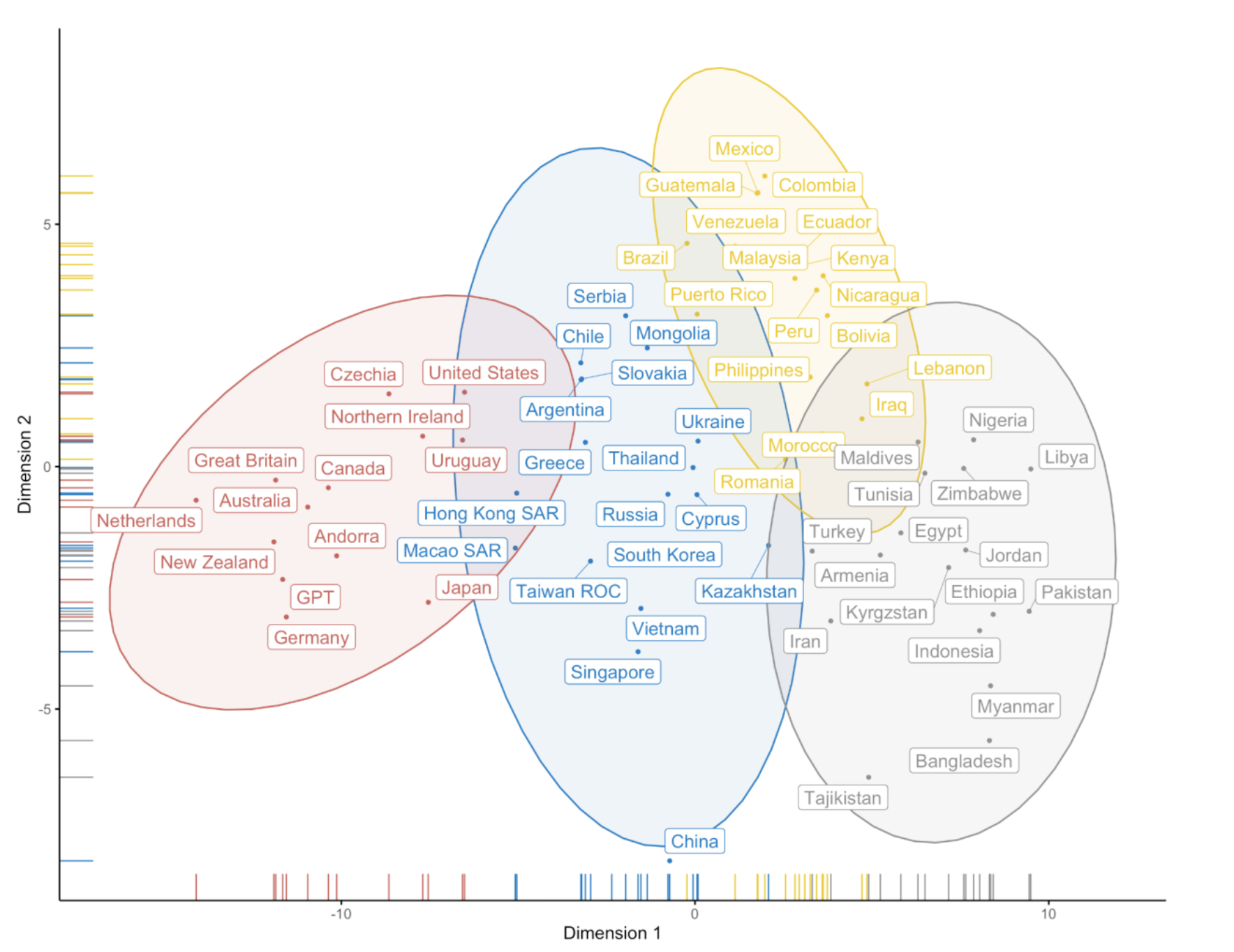
Another research team published a paper called ‘Which humans?’ where they described testing where large language model (LLM) outputs sit among large-scale cross-cultural data on psychological measures. The team found that when prompted with cognitive psychological tasks, LLMs produced outputs most similar to the task solutions of WEIRD people: Western, Educated, Industrialised, Rich, and Democratic. Only around 12% of the world’s population are WEIRD.
At first glance, this might seem like a language issue. But it goes deeper than language and translation. It’s about what different cultures value, assume, and believe.
An example from education is helpful here. The book Cleverlands by Lucy Crehan explores education systems around the world. Something Crehan describes in the book is the importance many Japanese schools place on group harmony and social cohesion, and how in contrast, many Western schools encourage students to stand out, challenge ideas, and express themselves individually. Neither approach is universally “correct”, but as examples they reveal how deeply culture shapes ideas about behaviour, success, and learning itself. Ideas about what makes a “good” student, how professionalism should be expressed, how disagreement should sound, or whether people describe themselves through personal achievements or through family and community relationships can vary significantly across cultures.
One of the most interesting findings in the ‘Which humans?’ paper is that LLM outputs mostly reflected more individualistic Western styles of thinking. In practice, this means AI-generated content may reinforce particular cultural norms while presenting them as normal and universal. Students learning with AI-generated content may not only be learning computing concepts or practising programming tasks, but also absorbing the ideas about identity, communication, and belonging embedded within the generated examples and explanations.
Who is the star of the story?
These cultural assumptions become much easier to spot when language models are asked to generate stories about people. A study presented by Dr Thema Monroe-White at one of our research seminars this year demonstrated this with solid data.
The results of the study were striking. Dr Monroe-White found that stories generated by LLMs showed consistent patterns of who was the focus in the stories, who appeared successful, and who occupied positions of authority or dependency. The study explored this by asking several major LLMs to generate short open-ended stories about classrooms, workplaces, and relationships. Importantly, the prompts did not explicitly mention race, gender, or ethnicity. Yet the models still produced remarkably consistent patterns in who appeared as the “star student”, the mentor, the professional, or the person needing help.
None of the study’s prompts asked LLMs to stereotype anyone. The patterns emerged anyway. This doesn’t suggest that LLM developers deliberately intended these outcomes. Rather, the models appear to reproduce patterns of bias already embedded within their training data. That the LLMs reproduce bias without being prompted can make the bias more difficult to notice.
What does this mean for generative AI in teaching?
Many of us educators are approaching AI tools with a mixture of curiosity, caution, and creativity. We are not looking to automate teaching. We are looking for practical ways to support learners, reduce workload, and spend more time focusing on the parts of teaching that matter most.
While we do this, we need to keep in mind that these systems are built from human data, shaped by particular cultures, languages, histories, and power structures. What an AI model presents as neutral, helpful, or normal may reflect a much narrower slice of humanity than we realise.
This is not a question of whether it is right or wrong to use AI tools in education. It is about recognising that seemingly neutral outputs may still carry hidden assumptions about culture, identity, ability, and belonging. If generative AI increasingly shapes the examples, explanations, and stories our students encounter, then learning to question those assumptions may become one of the most important forms of critical thinking we teach.
Try our free resources
For AI literacy resources that promote critical thinking, explore Experience AI. https://experience-ai.org/en
For more articles on critical thinking in the age of AI, download issue 30 of Hello World https://www.raspberrypi.org/hello-world/issues/30



No comments
Jump to the comment form