
‘Using PRIMM to teach programming’: A new short course for educators
At the Raspberry Pi Foundation, we believe that learning to program equips young people with the knowledge and skills they need to thrive in an increasingly digital world. For many educators, teaching programming effectively can be challenging, particularly when their learners are at different stages in their programming journey. Ask learners to write code too early, and they might struggle or feel intimidated. Rely too heavily on step-by-step instructions, and you limit learners’ chances to explore ideas or develop deeper understanding.
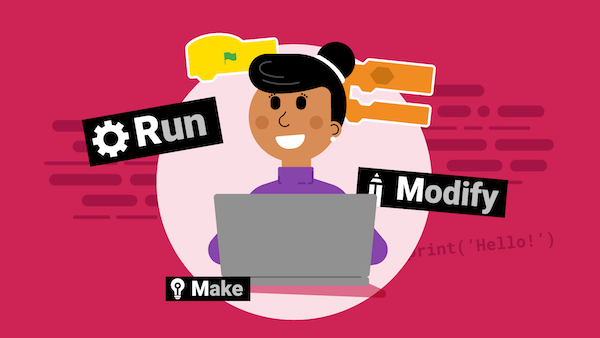
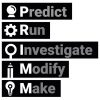
The PRIMM framework — Predict, Run, Investigate, Modify, Make — provides educators with a structure for teaching programming. This research-informed teaching approach balances support with independence and helps learners build their understanding before they write their own code, whatever their starting point.
To help educators use this approach confidently, we have launched a new short online course, Using PRIMM to teach programming, which is available on our new Training Hub platform for free.
What is the course about?
This practical, self-paced course gives educators the knowledge they need to use the PRIMM approach to design and adapt programming activities to suit their learners.
The course takes 1–2 hours to complete, and we have designed it for educators working in formal or non-formal learning environments around the world, using any block-based or text-based programming language. All you need is some experience of creating and adapting simple programs.
The course starts with considering the five stages of PRIMM, when and why to use each stage, and how they work together to support learning. It covers how PRIMM aligns with key teaching principles such as scaffolding, managing cognitive load, and progression, and examines how the approach supports formative assessment by making learners’ thinking — and any misunderstandings — more visible.
Active, social learning
Although pedagogy forms the core of this course, we have deliberately avoided a theory-heavy approach. Instead, the course is designed to help you learn through hands-on activities. By reflecting, taking part in discussions with other computing educators, and completing practical tasks, you will explore how PRIMM works in real teaching contexts.

After an introduction to the core ideas of PRIMM, you will design a new programming activity, or adapt an existing one, using the PRIMM structure. This will support you to think carefully about what your learners know and can do, likely misconceptions, and how each stage of PRIMM can be used effectively, including when your learners have varied learning needs and levels of programming experience.
With its emphasis on activity design, the course will support you to develop resources you can use and keep adapting in your own setting. By the end, you will have a complete PRIMM activity designed specifically for your learners, and a clear sense of how to teach programming in a structured and supportive way.
Join the course on the Training Hub
Using PRIMM to teach programming is available on our new Training Hub, where we offer all our professional development courses for free. The Training Hub offers flexible, reflective learning experiences across a range of topics, helping you build your subject knowledge and bring research-informed teaching approaches into your day-to-day practice.
Whether you are an experienced computing teacher, a volunteer educator, or a parent looking to support their child’s learning, we invite you to join us there.




No comments