
Hello World Podcast
Cognitive load in the age of AI
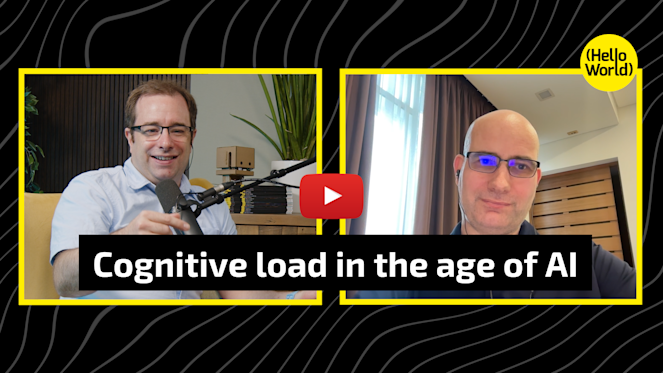
In this episode, host James Robinson is joined by James Abela, Director of Digital Learning & Entrepreneurship at Garden International School in Kuala Lumpur. Together, they discuss the difference between using cognitive load to support learning and using AI in ways that replace the thinking process entirely.
Meet our guests
James Robinson
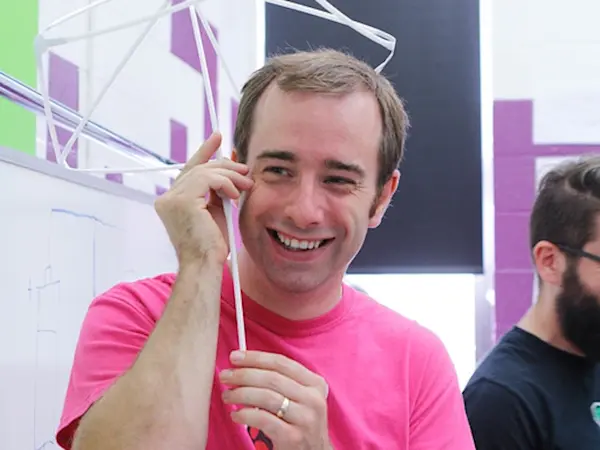
James Robinson is a highly experienced computing educator & trainer, with a background in Computer Science and 10 years of classroom experience teaching a range of STEM subjects. James currently works to promote evidence informed and effective practices in computing education Pedagogy.

James Abela
James is the Director of Digital Learning & Entrepreneurship at Garden International School in Kuala Lumpur, Malaysia and has a passion to give students the ability to think computationally, a skill that will enable them to programme effectively, solve a wide range of problems and make them much more resilient.
Cognitive Load in the age of AI
If you prefer to listen to your podcasts, you can access our episodes via your preferred streaming platform.
For insights into teaching and learning from classrooms all around the world, check out and subscribe to Hello World magazine. If you've enjoyed this episode and are excited for the upcoming series, please subscribe and leave a five-star review wherever you get your podcasts. In the meantime, you can get in touch with your questions or comments about the current episode at podcast@helloworld.cc. If you can, please take a moment to give us some feedback on this episode or our podcast generally.
Subscribe to Hello World magazine
Read the latest issue of Hello World, download Issue 30 for free today
Find out more about the charitable mission of the Raspberry Pi Foundation
Discover the research behind cognitive load theory
Explore PRIMM using our Pedagogy Quick Reads
Find out more about Diamond 9 using James Abela's useful resources
Check out Python Code Lab
Read James Abela's book: 21st Century Problem Solving: From zeroes and ones to Artificial Intelligence