
Levelling up with Python: Create with data
Learning Python often starts with the same building blocks: variables, functions, and loops. However, once young people have learnt these essential foundations, they may be eager to grow their skills and start using Python to explore data and create something meaningful to them.
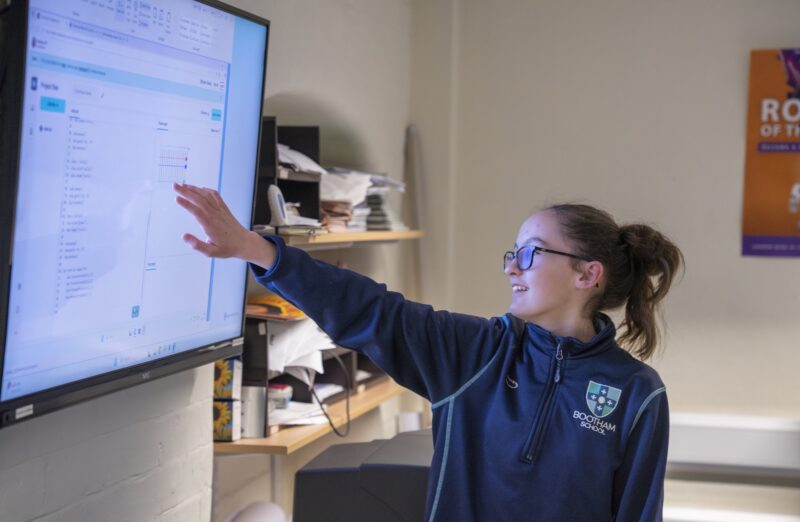
Our free ‘More Python’ project path helps learners move beyond the basics and use data to create impactful projects of their own.
Python as a tool for exploring the world
Python is the most widely used programming language in the world, not just because it’s accessible, but because it’s powerful. It is used to analyse data, build models, create data visualisations, and explore important questions.

For young learners, this means learning Python can become more than a coding exercise. It can be a way to investigate topics they care about, analyse and understand information, and tell powerful stories about real-world issues.
Working with data helps learners see how coding connects to the world around them — and builds confidence along the way.
Why learning with data matters
In our day-to-day lives, data is everywhere: in sports results, maps, and scientific research, to name only a few examples. Learning how to work with data helps young people develop skills that go far beyond programming, including:
- Thinking logically and solving problems
- Interpreting and questioning information
- Making decisions based on evidence
Data also underpins many of the AI systems people use today. For example, large language models, used to build tools such as ChatGPT, are trained on vast amounts of data. Therefore, understanding how data is collected, organised, and used is an important part of AI literacy.
In Python, structures like lists and dictionaries make it possible to organise, analyse, and explore data in creative ways. Using these tools to build projects can help abstract computing concepts start to feel more concrete and meaningful.
What learners create in the ‘More Python’ project path
The ‘More Python’ project path supports learners through three stages: Explore, Design, and Invent. Each stage builds skills while giving learners more ownership over what they create.
In the Explore stage, young people learn new concepts and build confidence in using data and core Python structures, such as lists and dictionaries. Projects include:
- Making an interactive chart of Olympic medals
- Building a model of the solar system
- Creating a frequency graph that learners can analyse to crack a code
These projects help learners develop new skills, while exploring how Python can be used to analyse and explain real-world information.
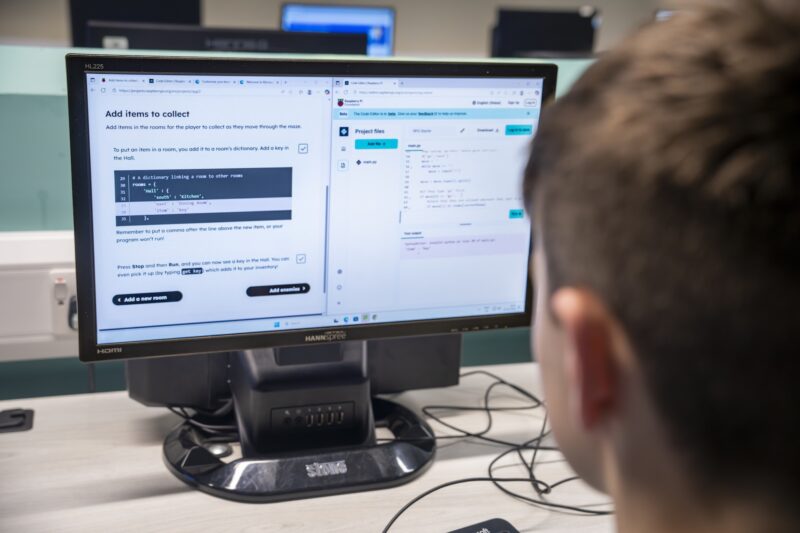
As learners progress to the Design stage, they start making creative choices about how their projects look and behave. In this stage, they:
- Create a project that produces encoded art based on a user’s name
- Build an interactive world map that helps users learn interesting facts
Here, Python becomes a creative medium. As well as putting their new skills into practice, learners think about audience, interaction, and presentation to make their projects their own.
In the Invent stage, learners bring everything together. Using the skills they have built, they design and create a data visualisation on a topic they are passionate about. This final project gives learners the freedom to choose their data, shape their idea, and tell a story that matters to them.

By this point, learners are planning and creating their own projects, growing in confidence and independence.
Take the next step with Python
If the young people you support have already learned the basics of Python, ‘More Python’ offers a clear and creative next step. The projects are designed to be accessible, and young people can work through them at their own pace, whether they are learning independently, at a Code Club, or in the classroom.
By working with data, getting creative, and making their own original projects, learners can build confidence and start to see what they can achieve with Python.
Alongside the ‘More Python’ project path, you can access hundreds of free coding projects on our Code Club Projects site. Find more projects to suit your learners’ interests, and support them to build their digital skills through creativity and making.





No comments
Jump to the comment form